Anyone who has cared for young children has likely encountered common eye infections, which are usually mild and treatable. However, in rare cases, what appears routine can develop into something far more serious and life-changing.
This is the story of a young boy whose condition began with what seemed like a simple eye irritation but later revealed a severe viral infection that dramatically affected his vision and required complex medical care.
Michelle Saaiman, a mother from Namibia, first noticed something unusual in her 16-month-old son Juwan’s eye in August. At first glance, it appeared similar to a typical infection many children experience.
Like many parents would, she sought medical advice and began treatment using prescribed antibiotic eye drops, expecting the issue to clear up quickly. However, instead of improving, the condition gradually worsened over time.
As the symptoms persisted, it became clear that the problem was not a routine bacterial infection. Concerned about the lack of improvement, Michelle sought further medical evaluation from a specialist.
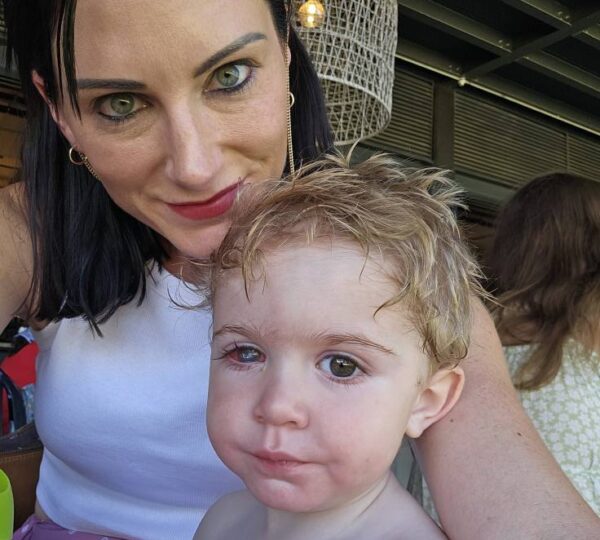
After conducting a thorough examination, doctors determined that Juwan had contracted Herpes Simplex Virus, a virus commonly associated with cold sores but capable of affecting other parts of the body.
In this case, the virus had infected the cornea, the transparent front layer of the eye, leading to a condition known as herpes keratitis, which can cause significant damage if not treated promptly.
The diagnosis was deeply shocking for Michelle and her family. She recalled struggling to process the information, as the idea of a cold sore-related virus affecting her child’s eye seemed almost unbelievable.
According to her account, the doctor explained that a blister-like lesion had developed directly on Juwan’s cornea, which is an uncommon but medically recognized manifestation of the virus.
Michelle later described the moment as surreal, even questioning whether she had misunderstood, as the diagnosis sounded so unexpected that it felt unreal at first.
Medical professionals indicated that the virus was likely transmitted through close contact, possibly from someone with an active cold sore who unknowingly came into contact with the child’s eye area.
While such transmission is not common, health experts confirm that HSV can spread through direct contact, especially when active lesions are present and hygiene precautions are not strictly followed.
As the infection progressed, it caused increasing damage to the delicate tissues of the cornea. Despite medical efforts, the inflammation and viral activity led to significant complications.

Over time, the condition resulted in severe vision loss in the affected eye. The damage to the cornea impaired its ability to function properly, ultimately leading to blindness in that eye.
Michelle explained that the infection affected not only the eye’s surface but also its ability to maintain normal function, including sensation and lubrication, which are essential for eye health.
In advanced cases of herpes keratitis, the cornea can become severely compromised, sometimes leading to thinning or ulceration, which requires urgent and specialized treatment.
Doctors closely monitored Juwan’s condition, as complications from HSV infections can be serious, particularly in very young children whose immune systems are still developing.
At one point, there were concerns about further deterioration, which led the family to seek more advanced medical care to try to preserve as much function as possible.
To access specialized treatment, Juwan’s parents traveled to Cape Town, where he could receive care from experts experienced in managing complex eye conditions.
There, he underwent procedures designed to stabilize the eye and support healing. One of these treatments included an amniotic membrane graft, which can help repair damaged ocular surfaces.
This type of procedure involves placing a biological membrane over the cornea to promote healing, reduce inflammation, and protect the eye from further damage during recovery.
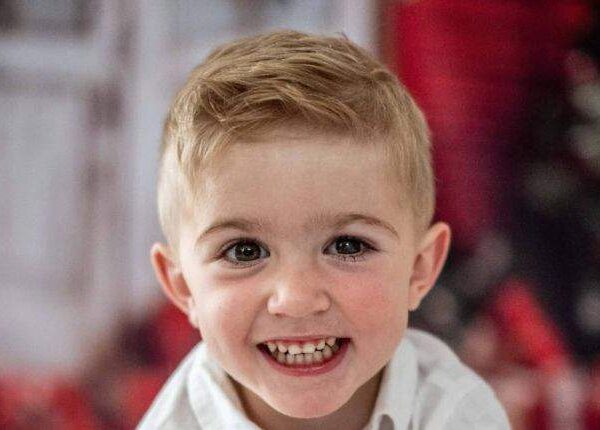
As part of the treatment process, doctors temporarily closed his eyelids to protect the eye and create an environment that supports healing and reduces exposure to external irritants.
Despite these interventions, the road to recovery has remained challenging. Severe damage to the cornea often requires multiple procedures over time, depending on how the eye responds to treatment.
Juwan’s medical team has discussed the possibility of additional surgeries, including procedures aimed at restoring nerve function, which plays a critical role in maintaining eye health and sensation.
If future treatments are successful, he may become a candidate for a corneal transplant, a procedure that replaces damaged corneal tissue with healthy donor tissue to restore vision.
Such procedures are complex and require careful timing, particularly in young patients, as doctors must ensure that the eye is stable enough to support a successful transplant outcome.
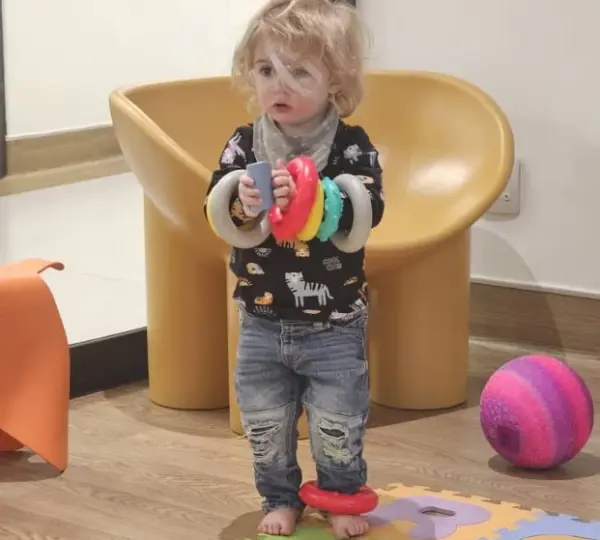
Throughout this difficult journey, Michelle has shared that her son has shown remarkable resilience. Despite discomfort and ongoing treatments, he has remained strong and responsive.
She described him as a cheerful child who continues to smile and engage with those around him, even during periods of discomfort and medical intervention.
The emotional impact on the family has been significant. Like many parents in similar situations, they have had to cope with uncertainty, fear, and the challenges of navigating complex medical decisions.
At first, Michelle and her husband experienced feelings of frustration and concern about how the infection may have occurred, particularly given how preventable such transmission can sometimes be.
However, over time, she has also emphasized that such situations are often unintentional, as many people may not be aware of the risks associated with close contact during active infections.
Her focus has shifted toward raising awareness about the importance of caution, especially when interacting with infants and young children whose immune systems are still developing.
Health professionals generally advise avoiding direct contact, such as kissing, when an individual has visible cold sores, as this can reduce the risk of transmitting the virus.
Michelle has used her experience to inform others about these risks, hoping to prevent similar situations from happening to other families in the future.
She shared her story publicly through social media, where it gained widespread attention and sparked conversations about child safety and infection prevention.
The response from the public has included messages of support, encouragement, and increased awareness about how everyday actions can sometimes carry unexpected risks.
In addition to emotional support, the family has faced financial challenges related to ongoing medical care, travel expenses, and specialized treatments required for Juwan’s condition.
Fundraising efforts have been organized to help cover these costs, reflecting the community’s willingness to support families dealing with complex medical situations.
Michelle has expressed gratitude for the assistance, noting that every contribution helps them continue pursuing the best possible care for their son.
The journey is ongoing, and while significant challenges remain, the family continues to work closely with medical professionals to explore all available options for treatment and recovery.
Juwan’s story highlights the importance of early diagnosis and specialized care when dealing with unusual or persistent medical symptoms in children.
It also underscores the need for awareness about viral infections and how they can sometimes affect unexpected areas of the body under certain conditions.
While herpes simplex virus is common and often manageable, its impact can vary widely depending on where the infection occurs and how quickly it is treated.
This case serves as a reminder that even familiar viruses can lead to serious complications, particularly in vulnerable individuals such as infants and toddlers.
Parents and caregivers are encouraged to seek medical advice promptly when symptoms do not improve as expected, as early intervention can make a significant difference in outcomes.
Maintaining good hygiene practices and being mindful of close contact during active infections are simple but important steps in reducing the risk of transmission.
Michelle continues to advocate for awareness, emphasizing that her goal is not to assign blame but to help others understand how to protect children from preventable risks.
Her story has resonated with many people, encouraging conversations about health, responsibility, and the importance of informed caregiving practices.
Despite the difficulties, the family remains hopeful. Advances in medical care provide potential pathways for improvement, even in complex cases like Juwan’s.
Each stage of treatment represents a step forward, guided by careful planning and the expertise of medical professionals dedicated to pediatric eye health.
Juwan’s strength and resilience continue to inspire those who follow his story, reminding others of the importance of compassion, awareness, and support.
Ultimately, this experience highlights both the challenges and possibilities within modern medicine, as well as the vital role of education in preventing similar situations.
It serves as a powerful reminder that small actions can have significant consequences, and that awareness can play a key role in protecting the health and well-being of children.