For decades, Budweiser has become synonymous with the Super Bowl—not just for the beer itself but for the iconic commercials that accompany the big game.
Year after year, viewers tune in not only to watch the gridiron battles on the field but also to witness the memorable, often emotionally charged advertisements that air during the game.
In 2026, Budweiser added yet another chapter to its storied legacy with a commercial titled “American Icons,” a 60-second masterpiece that combined heart, nostalgia, and the unmistakable imagery of America’s most beloved symbols: the Clydesdale horses and the bald eagle.
Over 125 million people tuned in for Super Bowl LX, watching the Seattle Seahawks overpower the New England Patriots and witnessing Bad Bunny’s unforgettable halftime performance.
While the game and the halftime show generated massive social media discussion, Budweiser’s ad immediately stood out, capturing hearts across the nation.
Its focus on friendship, growth, and shared experiences between two of America’s most iconic animals—a baby Clydesdale and a baby bald eagle—resonated with viewers in a way that was deeply emotional and uniquely American.
The Concept Behind “American Icons”
Budweiser has long been a master of storytelling, using its commercials to evoke emotion, nostalgia, and a sense of national pride.
The 2026 commercial, celebrating Budweiser’s 150th anniversary as well as America’s approaching 250th birthday, stayed true to that tradition while exploring new thematic ground.
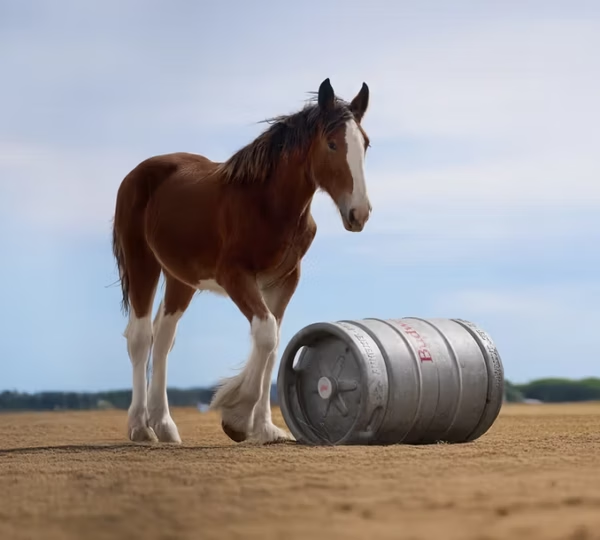
“American Icons” tells the story of an unlikely friendship between a young Clydesdale foal and a baby bald eagle.
From the very beginning, the ad portrays these two animals in their earliest stages of life, highlighting the vulnerability and innocence that accompanies youth.
Both creatures are initially hesitant, timid, and unsure of the world around them. Yet, through shared moments—gentle touches, playful interaction, and the sheer joy of companionship—they grow together, learning from each other, strengthening their bond, and ultimately maturing into majestic representations of American spirit and resilience.
The narrative mirrors the broader story of America itself: growth, challenges, friendship, and enduring strength.
The juxtaposition of the grounded, powerful Clydesdale with the soaring, free-spirited bald eagle provides a symbolic representation of the diverse yet united aspects of the nation—strength and grace, steadfastness and freedom.
Cinematic Excellence
From a production standpoint, Budweiser spared no expense. The commercial opens with a sweeping aerial shot of an American countryside bathed in golden sunlight, immediately establishing both scale and emotion.
The camera then focuses on the foal, struggling to find its footing, and the tiny eagle, unsure how to stretch its wings. Subtle lighting and carefully chosen camera angles capture every expression, from curiosity to hesitation, emphasizing the emotional connection that is forming between the two animals.
As the commercial progresses, the bond between the foal and the eagle grows. Scenes of the animals playing in open meadows, exploring their environment, and learning together are interspersed with moments of vulnerability: a stumble, a hesitant approach, a momentary pause before flight.
These moments are accentuated by a moving musical score, designed to elicit a sense of awe, wonder, and emotional investment from the audience.
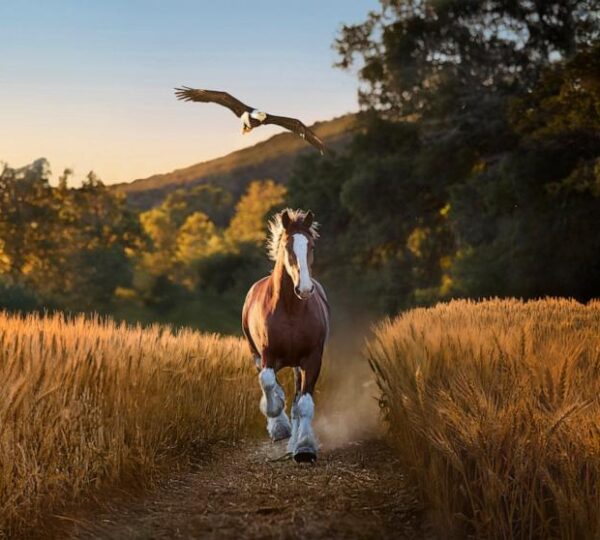
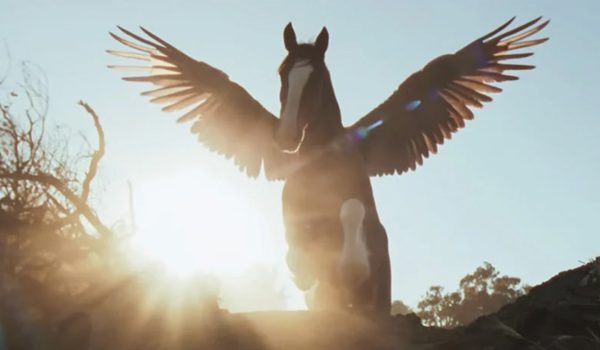
Perhaps the most striking visual occurs toward the climax of the commercial, when the fully grown Clydesdale gallops across an expansive field, while the bald eagle soars high above, perfectly synchronized with the horse below.
This imagery encapsulates the theme of unity through diversity, a powerful homage to American ideals, and a reminder that greatness can emerge from the simplest beginnings.
Themes of Friendship and Growth
At its core, “American Icons” is a story of friendship and personal growth, told in a universal language that transcends age, nationality, and background.
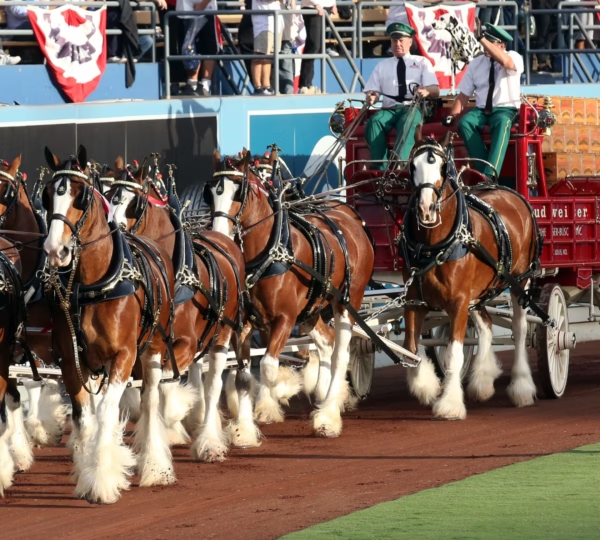
The choice to focus on a Clydesdale and a bald eagle was deliberate: each animal carries symbolic weight. The Clydesdales, first introduced in Budweiser ads in the 1930s, have long been associated with strength, reliability, and the pioneering spirit.
The bald eagle, America’s national bird, symbolizes freedom, vision, and courage. Together, they create a narrative that is both emotionally resonant and deeply patriotic.
The ad also reflects a subtle coming-of-age story. Both the foal and the eagle start life inexperienced and uncertain. Through interaction, they build confidence and resilience.
This allegorical portrayal resonates with viewers, many of whom recognized their own life experiences mirrored in the animals’ journey. The story is universal: the challenges of growing up, forming connections, and learning to navigate the world are themes that strike a chord in people of all ages.
Social Media Buzz
As soon as the commercial aired, social media exploded. Within hours, Budweiser’s official YouTube channel had uploaded “American Icons,” and by the end of the day, it had amassed over 3 million views, with the numbers climbing steadily.
Viewers praised the ad for its emotional depth, cinematography, and storytelling. Comments ranged from expressions of joy and tears to admiration for the brand’s commitment to quality storytelling.
One viewer commented, “This ad gave me goosebumps. I’ve watched it three times already, and I can’t stop smiling. It’s beautiful.” Another wrote, “Budweiser knows how to tell a story that touches the heart.
The baby horse and eagle made me tear up!” The ad also sparked conversations about the symbolism behind the animals, the representation of American values, and the nostalgia it evoked.
It’s a testament to Budweiser’s marketing genius that in an era where viewers often skip commercials or use DVRs to avoid them entirely, this ad commanded full attention.
People were not just watching—they were engaging, sharing, and discussing it, demonstrating the emotional power and cultural impact of a well-crafted Super Bowl commercial.
A Tradition of Emotionally Driven Super Bowl Ads
Budweiser’s legacy in Super Bowl advertising is built on emotional storytelling. From the unforgettable Clydesdale foals in snow-covered towns to heartwarming narratives involving friendship, community, and perseverance, the brand has consistently created content that goes beyond mere product promotion.
“American Icons” continues this tradition by combining several elements: iconic imagery, patriotic symbolism, universal themes of growth and friendship, and a narrative arc that resonates on an emotional level.
This isn’t just a beer commercial; it is a short film designed to evoke feelings, spark conversation, and leave a lasting impression on viewers.
The decision to feature both a Clydesdale and a bald eagle reinforces Budweiser’s commitment to celebrating American heritage. The foal represents grounded strength, tradition, and reliability, while the eagle embodies aspiration, freedom, and vision.
Together, their story reminds viewers that America’s greatness lies not in a single trait or individual, but in the harmonious balance of diverse strengths working toward a common goal.
The Cultural Impact
Super Bowl ads are often judged not only on creativity and entertainment but also on their cultural relevance. Budweiser’s 2026 commercial achieved both.
By tying the narrative to significant milestones—Budweiser’s 150th anniversary and America’s 250th birthday—the brand reinforced its position as a cultural icon deeply connected to national identity.
Furthermore, the ad resonated in a time when viewers crave authenticity, emotional resonance, and stories that celebrate connection.
In a world dominated by rapid-fire media, fleeting trends, and digital overload, “American Icons” offered a rare moment of pause—a story viewers could watch, reflect on, and feel deeply.
Many commentators noted that the commercial successfully balanced sentimentality with sophistication. Unlike typical Super Bowl spots that rely heavily on humor or celebrity cameos, Budweiser relied on storytelling and visual mastery, showing that emotional engagement can be just as, if not more, powerful than star power or flashy effects.
Behind the Scenes
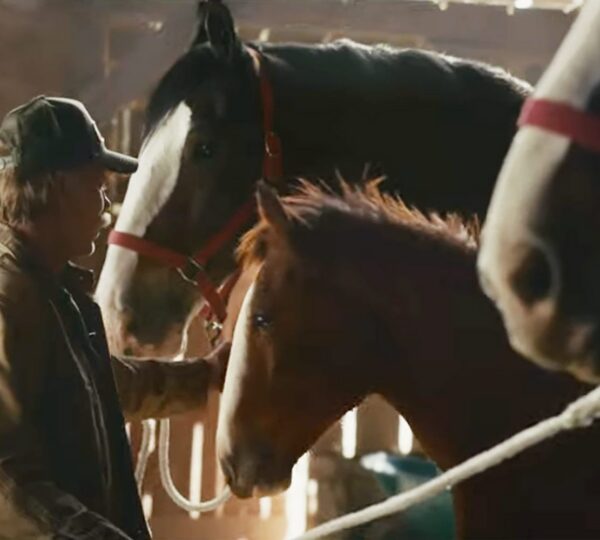
The creation of “American Icons” involved months of careful planning, training, and production. Budweiser partnered with expert animal trainers to ensure the safety and comfort of the Clydesdale foals and the young eagle.
The production team worked meticulously to capture every angle, from close-ups of expressive eyes to sweeping shots of wide-open fields. Lighting, sound design, and music were all calibrated to evoke the maximum emotional impact.
Moreover, the filmmakers faced the challenge of capturing interactions between two species with vastly different temperaments and physical abilities.
The result, however, was seamless: viewers felt as though the foal and the eagle had naturally formed a friendship, creating an emotional connection that transcended the screen.
Reception and Legacy
The response to Budweiser’s 2026 Super Bowl commercial has been overwhelmingly positive. Social media engagement, YouTube views, and conversations in traditional media demonstrate that the ad achieved what it set out to do: create an emotional, memorable, and culturally relevant moment.
Critics praised the commercial for its storytelling, symbolism, and cinematography. Marketing analysts highlighted Budweiser’s continued ability to craft ads that resonate with multiple generations, from older viewers nostalgic for past campaigns to younger audiences drawn to the visual storytelling and universal themes.
The commercial also generated discussions about the importance of friendship, growth, and resilience—not only among animals but in human relationships.
For many, the story of a foal and an eagle growing together symbolized hope, unity, and the idea that meaningful connections can flourish in even the most unexpected circumstances.
Conclusion
Budweiser’s “American Icons” Super Bowl LX commercial stands as a shining example of how advertising can move beyond product promotion to become a powerful storytelling medium.
Through the journey of a baby Clydesdale and a baby bald eagle, the brand delivered a tale of friendship, growth, and unity that resonated deeply with viewers across America.
In celebrating Budweiser’s 150th anniversary and the nation’s 250th birthday, the ad reminded viewers of the enduring values that unite Americans: strength, freedom, hope, and the power of connection.
By combining iconic imagery, exceptional cinematography, and a universally appealing narrative, Budweiser has once again proven that its Super Bowl commercials are more than ads—they are cultural touchstones.
Whether you watched the game for the football, the halftime show, or the commercials, “American Icons” is the spot that will linger in memory, evoke emotion, and remind us all why Budweiser remains one of the most celebrated brands in Super Bowl history.
The story of a foal and an eagle growing together is now etched into the hearts of millions, a testament to the enduring power of storytelling and the magic of shared experiences.